Today I planed the Cherry wood needed to build the Entry Way table. Planing wood involves using a thickness planer to reduce the thickness of the main wood pieces down to whatever your plans require. In this case, the plans for the Entry Way table call for ¾” thick wood. The wood that I get from my local hardwood shop is usually much thicker than that. It is S2S (surfaced on two sides). It is not in finished condition.
You need the right equipment to take these rough boards and make them into boards that are equally dimensioned so you can use them to cut out the pieces necessary to build your project. In this case, the right equipment is a thickness planer. Here is a photo of my Ridgid 13” planer setup.
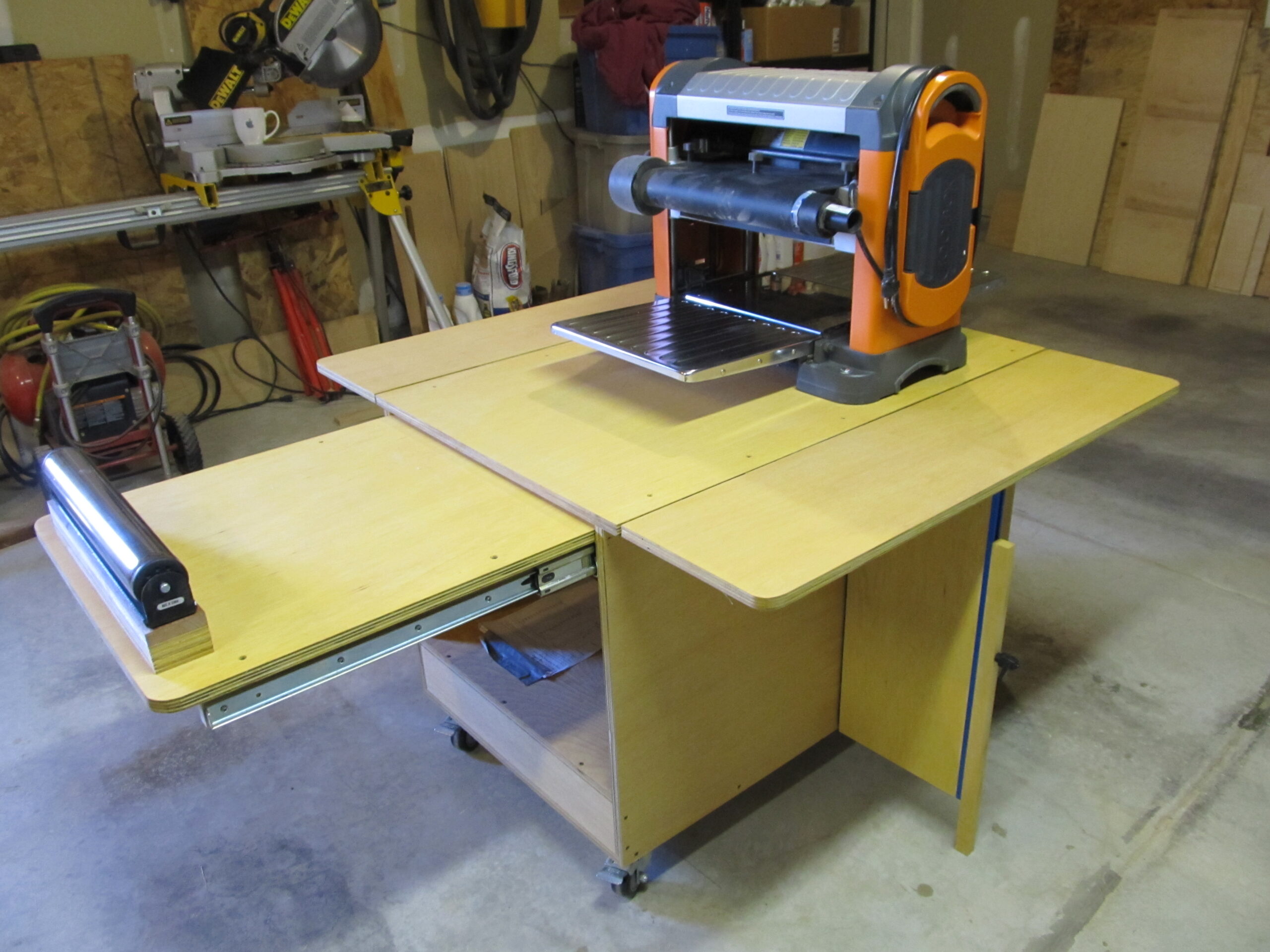
You feed the wood in the front, it comes out the other side, slightly thinner. My planer is not super powerful, so I need to make multiple passes. Not only does the planer reduce the wood thickness, it also smooths out the flat surfaces to a certain extent.
The planer sits on a roll out, portable stand that I made for it many years ago. The wings are for stacking wood that you feed through the planer. When you are finished planing, the legs fold inward and the shelves drop-down to the sides of the unit. The stand is on wheels, I just wheel it back out of the way. Most of my equipment is on wheels because my shop is my garage. I don’t have a dedicated shop. So, I back the cars out, roll out the equipment I need and work inside my garage-shop.
Planing creates a great deal of sawdust. Each pass through the planer removes quite a bit of wood. But, when all is said and done, you have boards ready to be cut into project pieces.
Doug